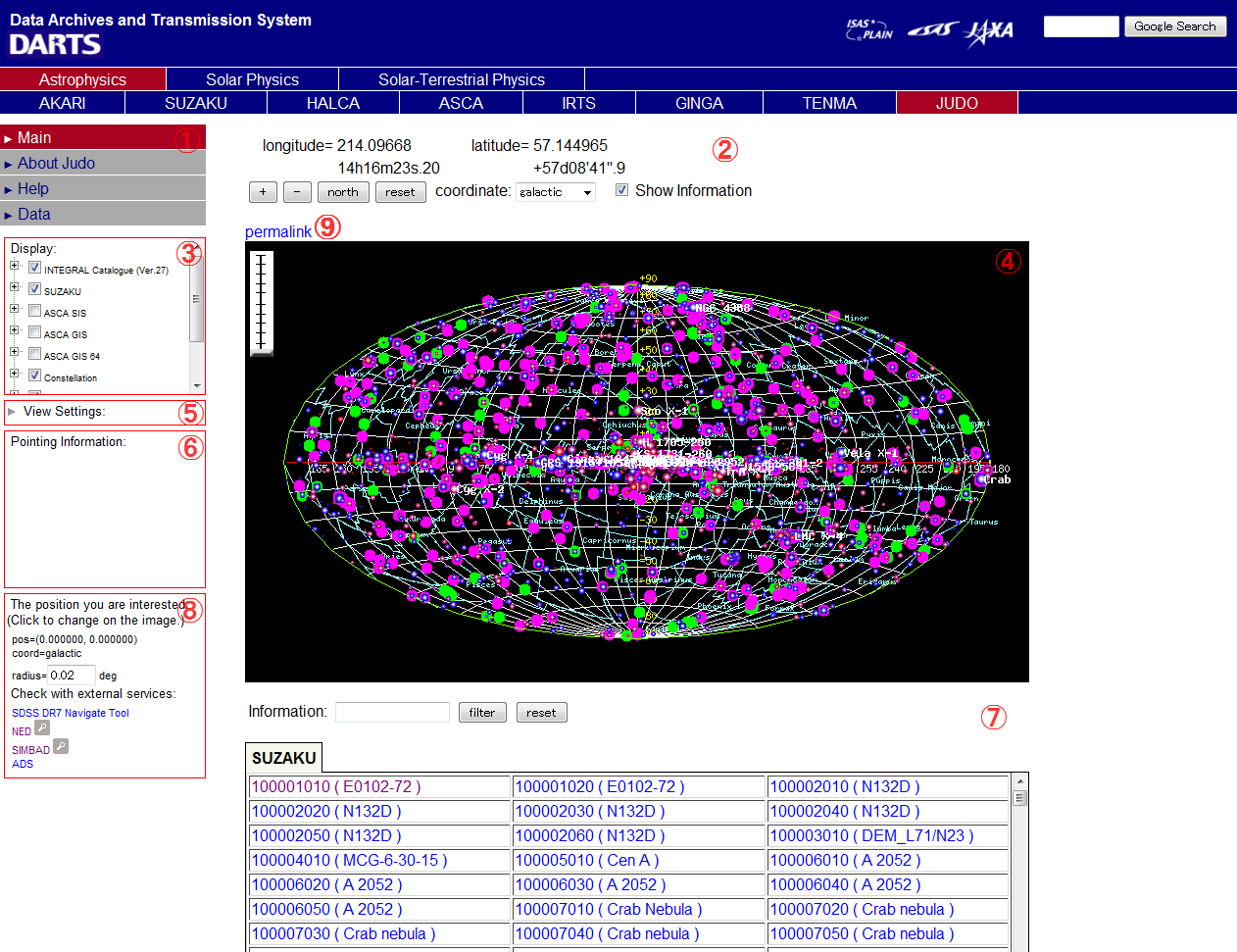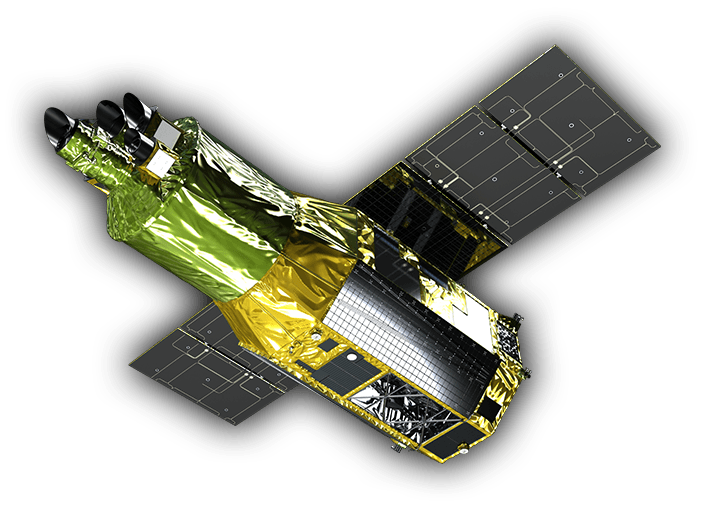
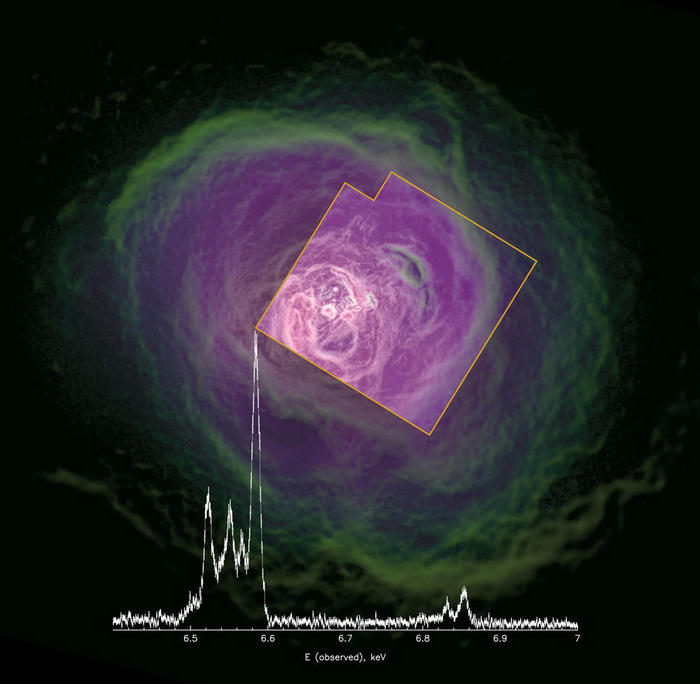
ASTRO-H science results: See my ASTRO-H and Hitomi pages
Space Science Seminar
Speaker:    Dr. Kiwamu Izumi(Postdoctoral fellow in physics, California
      Institute of Technology,LIGO Hanford Observatory)
Title:      Advanced LIGO starts the 1st observation run
.
Abstract:
 Gravitational waves are ripple of space-time which nobody ever directly detected.Advanced LIGO is an ambitious U.S. project that improves the sensitivity of LIGO  (Laser Interferometer Gravitational-wave Observatory) and will be capable of  detecting a gravitational wave event from a neutron star binary at a distance of 200 Mpc.  The detection rate of advanced LIGO, if running fully at the design sensitivity,  may reach as high as a few events per year and therefore it will consequently allow us for opening a new astronomy branch, gravitational-wave astronomy. After finishing  all the installation in this Spring, we have spent our time on tuning the interferometers in order to prepare for the planned first observation run. The observation run will start at 14th of this September for three months with a lowered laser power. In this talk, I will give an overview of advanced LIGO together with some highlights from
 the recent turning experiments, and finally talk about possible detection scenarios.
            「宇宙科学セミナー(第9回)」
日時:       2015年9月18日(金)16:30-17:30
      ※通常と曜日が異なる(金曜開催)のでご注意願います。

場所:       宇宙研 A棟2階 大会議場
講師:       和泉 究氏(カリフォルニア工科大学 LIGO ハンフォード観測所研究員)
題目:       Advanced LIGO 観測始動
概要   重力波は未だかつて誰も直接観測をしていない時空の揺らぎの波である。
Advanced LIGO は米国主導のLIGO (Laser Interferometer Gravitational wave
Observatory)のアップグレード計画であり、200 Mpc 程度離れた中性子星連星か
らの重力波イベントまで検出できる感度へ到達しようという野心的なプロジェク
トである。Advanced LIGO をデザイン感度で走らせると年間数イベント以上の重
力波イベントが観測されると期待されており、これにより天文学の新しい分野・
重力波天文学が幕開けする と期待されている。今年の春にインストールが全行
程終了し、advanced LIGOはこれまで初観測に向けた干渉計の調整を行ってき
た。初観測は低レーザーパワー運転で9月14日より3ヶ月間行う予定である。
本トークではadvanced LIGOの概要を俯瞰しつつ、調整期間に実施された実験か
らいくつかのハイライトを紹介し、最後に考えられる検出シナリオについて述べ
る予定である。
Prof. Shunsaku Horiuchi (Virginia Tech)
Monday December 22, 11:00 am
Abstract:
The cold dark matter cosmological paradigm has been extremely successful in explaining cosmic structure on large scales. Yet, it has constantly been challenged by observations that probe small-scale structures. I will first introduce these challenges, and discuss how warm dark matter provides an alternative that help resolve such small-scale issues whilst maintaing the successes on large scales. From the particle perspective, I will focus on sterile neutrinos, one of th leading warm dark matter candidates. Finally, anomalous 3.5 keV lines have recently been reported, which may be interpreted as sterile neutrino dark matter decay signals. I will discuss implications of this signal in the context of sterile neutrino cosmology.
http://www.phys.vt.edu/~horiuchi/HOME.html

ISAS
       Space Science Seminar
Date:       15:30-16:30, 6th of November (Thu), 2014
Place:      Bldg-newA 2F Meeting room A
Speaker:    H. Philip Stahl (NASA/MSFC, USA)
Title:      James Webb Space Telescope:  The First Light Machine

Abstract:
Scheduled to begin its 10 year mission after 2018, the James Webb Space
Telescope (JWST) will search for the first luminous objects of the
Universe to help answer fundamental questions about how the Universe
came to look like it does today.  At 6.5 meters in diameter, JWST will
be the world’s largest space telescope.  This talk reviews science
objectives for JWST and how they drive the JWST architecture, e.g.
aperture, wavelength range and operating temperature.  Additionally, the
talk provides an overview of the JWST primary mirror technology
development and fabrication status.
2014-10-09
Dr. Yoshiki Matsuoka (NAOJ/Princeton)
ISAS Astrophysics Colloquium at conference
Title: Let It Roar: Supermassive Black Holes at the Heart of Galaxies
Abstoract:
It is now widely accepted that every galaxy with a bulge weighing over
about a billion solar masses hosts a supermassive black hole (SMBH) at
its center. While SMBHs are quiescent most of the time, they are
occasionally awakened from sleep by falling material and start to roar.
Such an activated SMBH is believed to manifest itself as active galactic
nucleus (AGN), an extremely tiny and luminous source found in some
galactic centers. AGNs have long been studied as an important
constituent of the Universe, but on top of that, we are starting to
realize that they might have impacted the evolution of the host galaxies
in an irreparable way. I will start the talk with a general review of
SMBHs, AGNs, and their interrelation with the host galaxies, and then
will focus on one of the hottest topics of the field, AGN-driven
winds/outflows observed in the host galaxies which might be closely
related to the so-called co-evolution of galaxies and SMBHs.
Dr. Kazushi Sakamoto (ASIAA)
*Wednesday*, Jun 18th, 11:00 am
http://www.astro.isas.jaxa.jp/~tsujimot/astro_colloq/
Abstract:
Molecular outflows from nuclei of active galaxies have been known for three decades. They are most easily seen through off-plane molecular gas above (and below) the nuclei of edge-on disk galaxies. Recently a wide variety of galactic molecular outflows have been revealed through developments of new observing
facilities and techniques. At the same time, molecular outflows from galaxies are gaining more attention in the context of galaxy evolution as a step to turn gas-rich blue galaxies to gas poor red ones. I am going to present our recent observations of molecular outflows from galaxy nuclei. They add new flavors to the known galactic molecular outflows, such as twin outflows from binary merger nuclei, a nucleus with
both inflow and outflow, and a highly-collimated bipolar molecular jet that is apparently accelerating along the outflow.
2013年8月6日火曜日 午後1時半から午後2時半まで
JAXA 相模原キャンパス A棟6階 会議室

講師:田村隆幸(JAXA宇宙研)

アブストラクト:
前回の鎌田さんのセミナーで,グラヴィティーノ,モジュライなどの
"軽くて,相互作用が超弱い" 粒子がDMの候補として紹介された.
Sterile Neutrino(SN)もそのようなDM候補の一つである.この粒子
は,keV相当の質量を持ち,崩壊によってX線を放射する可能性がある。ただ
し,その崩壊率は非常に小さく,地上での検出はとても難しい。宇宙の大規模構
造の暗黒物質がユニークな探査ターゲットである。これまでもいくつかの衛星
で,このX線探査が行われてきた。未だ,有為な検出はない。これらの結果をレ
ビューする。ASTRO-H/カロリメータでの検出の可能性を検討した。エネルギー分解能の良いカロリメータの場合には,これまでとは質的な違った分光が可能になる。ただし,小さな視野に適した暗黒物質が多くかつバリオンからのX線放射が少ない天体を選ぶ必要がある。天の川銀河,矮小銀河,渦巻き銀河,楕円銀河,銀河団での探査について検討した。これらの状況を報告する。