ラベル ASTRO-H の投稿を表示しています。 すべての投稿を表示

2016年1月16日土曜日

ASTRO-H in news

* 2015-12-02
http://news.mynavi.jp/articles/2015/12/02/astro-h/
報道公開を基にしている。
「すざく」でのXRSの失敗原因などについても説明されている。


Now there’s a look in your eyes, like black holes in the sky

The economist

The universe’s darkest denizens are being dragged into the light

http://goo.gl/SvReMA

(copy)
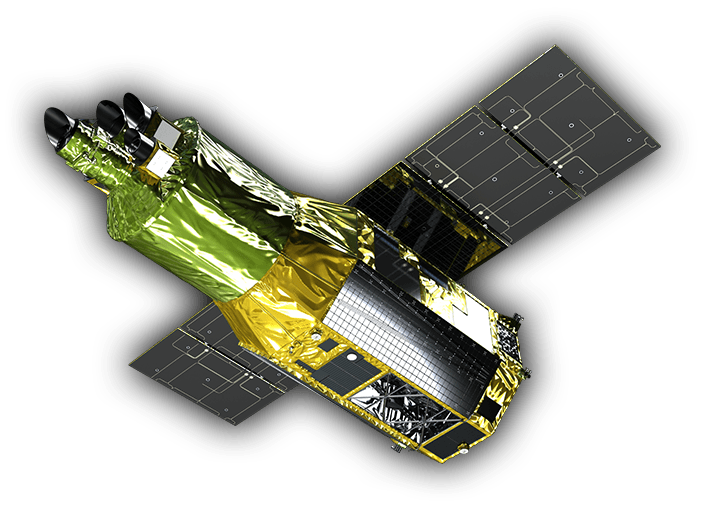
Working out how black holes affect galactic growth, though, is not the same as finding out what is happening in the vicinity of the holes themselves. Here, matter is circling close to a black hole’s point of no return, the “event horizon” whose radius was described by Schwarzschild’s calculations. And next month, JAXA, Japan’s space agency, will launch Astro-H, a telescope that will help to do this. It can detect X-rays of exceptionally high energies. As material slips ever closer to the event horizon, the precise details of its X-ray output are a signal of how it is moving. Astro-H will be able to measure this radiation, and thus infer that motion with unprecedented precision. This will permit researchers to measure unambiguously, for the first time, how fast a black hole is spinning. That, in turn, permits tests of Einstein’s general theory of relativity—the very theory that Schwarzschild used to put black holes on solid mathematical ground—that have remained out of reach until now.

2015年8月27日木曜日

looking into X-ray spectra

I have been looking into these kinds of X-ray spectra from the hot universe.
For some long time…
Can I discover something new from these data further more ?
Or need brand new instruments ?

2015年7月2日木曜日

ASTRO-H Thermal Vacuum Test @ Tsukuba

Join final integration and test of the ASTRO-H
at
Tsukuba Space Center.
http://www.jaxa.jp/about/centers/tksc/index_j.html


- 2015-06-26,27,28
- 2015-07-03,04


2015年3月23日月曜日

Cluster Physics with ASTRO-H

◎ASTRO-H特別セッション:ASTRO-Hが拓くサイエンス
2015-03-18 @ Osaka

      2. ASTRO-Hの目指すサイエンス
          (3) 銀河団                   田村隆幸(JAXA/ISAS)


2015年3月14日土曜日

ASTRO-H特別セッション@天文学会 2015 March

http://www.asj.or.jp/tennet/archives/msg05007.html

◎ASTRO-H特別セッション:ASTRO-Hが拓くサイエンス

日時:2015年3月18日(水) 15:15〜17:15
場所:A会場
概要:  ASTRO-Hは、日本で6番目の国際X線天文台です。マイクロカロリメータ
      による超精密分光(E/ΔE~1000)や0.3~600 keVの3桁以上もの広帯域で
      の高感度観測が可能となります。銀河団、超新星残骸、ブラックホール
      近傍などの高温ガスの運動や、非熱的な放射を高感度でとらえることで、
      宇宙の進化に対する理解が大きく進展すると期待されています。 
        ASTRO-Hの製作は、国内外のメンバー、担当メーカーの努力により順調に
      進んでいます。打ち上げは2015年度,そして打上後すぐに観測提案の公
      募が始まる予定です。 天文コミュニティーのみなさまにその性能を十分
      に理解していただき、様々な波長域の観測や理論との連携について議論
      を進めることを目的に、若手による講演中心の特別セッションを企画し
      ました。

プログラム:  
       1. ASTRO-H計画の概要            高橋忠幸(JAXA/ISAS)
       2. ASTRO-Hの目指すサイエンス
          (1) ブラックホール           山田真也(首都大東京)
          (2) 超新星残骸               勝田哲 (JAXA/ISAS)
          (3) 銀河団                   田村隆幸(JAXA/ISAS)
       3. ASTRO-Hへの期待              吉田道利(広島大)

世話人:嶺重慎(京都大、代表)、大橋隆哉(首都大東京)、
        高橋忠幸(JAXA/ISAS)、北山哲(東邦大)、松下恭子(東京理科大)


2015年2月12日木曜日

bash script to run XSPEC and find parameter error

(2015-02-12 for ASTRO-H simulation)

#!/bin/bash
# xspec find parameter range
# only 1 parameter fit

this=fitC1

# input
model_xcm=$1
data=$2

# fit range
free_p=$3
p_0=$4
p_width=$5
p_min=$6
p_max=$7

#default
# fit energy range
e_min=6.5
e_max=6.8
delta_chi=$DELTA_CHI

resp=${SXS_RMF}
arf=${SXS_ARF}

# output
if [ ! -e ${OUTDIR} ]; then
    echo "mkdir ${OUTDIR}"
    mkdir -p ${OUTDIR}
fi

log=${OUTDIR}/${this}_para${free_p}.log
com=${OUTDIR}/${this}_para${free_p}.xcm
ps=${OUTDIR}/${this}_para${free_p}.ps

# xspec will run ${model}

cat >| $com <que no
data ${data}

resp 1 $resp
arf 1 $arf

setp ene
cpd /xs

ig 0.0-${e_min} ${e_max}-**
@${model_xcm}

log $log
show all
fre 1-6
thaw ${free_p}
newp ${free_p}          ${p_0} ${p_width} ${p_min} ${p_min} ${p_max} ${p_max}
show free

plot d ratio

fit
fit
err ${delta_chi} ${free_p}
fit ${free_p}
err ${delta_chi} ${free_p}

log none

cpd $ps/vps
plot d ratio
cpd /xs
quit
y

EOF

xspec - $com

echo "check ${OUTDIR}"


bach script to run fake in XSPEC

(2015-02-12 for ASTRO-H/SXS simulation)

#!/bin/bash
# run xspec
# fake spectra

#
this=fake1

# input
model_xcm=$1
t_exp=$2
outdir=$3

# responses
resp=${SXS_RMF}
arf=${SXS_ARF}

# grppha 2bin = 2eV
bin=2

# output
log=${outdir}/xspec.log
out=${outdir}/${this}.fak
out_bin=${out}.${bin}eVgrp
ps=${outdir}/${this}.ps

if [ -e ${out} ]; then
    rm -rf${out} ${out_bin}
fi

if [ ! -e ${outdir} ]; then
    mkdir -p ${outdir}
fi

# xspec will run here

xspec <
@${model_xcm}

fakeit none
${resp}
${arf}
y
fake
${out}
${t_exp}

## grouping ##
grppha ${out} ${out_bin}
group 0 16383 $bin
exit

## check flux

log ${log}
show all
flux 0.5 10
flux 6.61 6.71
ig 0.0-6.61 6.71-**
show data
log none
no 1-**

cpd /xs
setp com log x off
setp com r x 6.48 6.82
setp com la f ${outdir}/${out_bin}
setp com la t "exp=${t_exp} secs"
setp com fo ro
setp com cs 1.3

setp ene
plot d
cpd ${ps}/vps
plot d
cpd /xs
quit
y

EOF

ls ${outdir}


2015年1月22日木曜日

ASTRO-H White Paper - Clusters of Galaxies and Related Science

http://arxiv.org/abs/1412.1176

2014-12
Kitayama et al.

(2015-01-22)
Collaborated with ASTRO-H SWG, I contributed to this work.

(copy, abstract)
The next generation X-ray observatory ASTRO-H will open up a new dimension in the study of galaxy clusters by achieving for the first time the spectral resolution required to measure velocities of the intracluster plasma, and extending at the same time the spectral coverage to energies well beyond 10 keV. This white paper provides an overview of the capabilities of ASTRO-H for exploring gas motions in galaxy clusters including their cosmological implications, the physics of AGN feedback, dynamics of cluster mergers as well as associated high-energy processes, chemical enrichment of the intracluster medium, and the nature of missing baryons and unidentified dark matter.


2014年12月24日水曜日

Cosmology and Astrophysics with Galaxy Clusters

ISAS astro seminar

Prof. Daisuke Nagai (Yale)
Thursday December 25, 11:00 am
1134 : Bldg-A 1F Nyusatsu room

Title:  Cosmology and Astrophysics with Galaxy Clusters

Abstract: 
Galaxy clusters are the most recently formed cosmological objects in
the universe, making them ideal for studying the interplay between
cosmology and baryonic physics in structure formation. Understanding
their formation and growth requires not only an understanding of the
baryonic physics behind gas cooling, star and black hole formation,
and feedback processes, but also the detailed dynamics of how gas
accretes from the cosmic filaments onto the virialization regions in
the outskirts of galaxy clusters throughout their lifetime. Recent
X-ray and microwave observations have revealed detailed thermodynamic
structure of the hot X-ray emitting plasma from their cores to the
virial radii, making comparisons of baryonic component in simulations
to observations a strong cosmological probe. In this talk, I will
review recent advances in our understanding of cluster astrophysics
and discuss future prospects, opportunities and challenges (including
upcoming measurement of turbulent gas motions with ASTRO-H) a for
the use of galaxy clusters as a precision cosmological probe.

http://physics.yale.edu/people/daisuke-nagai


2014年11月3日月曜日

宇宙学校・とうきょう 2014-11-03

http://www.isas.jaxa.jp/j/topics/event/2014/1103_tokyo.shtml


(2015-01-22)
講師として参加しました。
「宇宙の見えないもの」、
暗黒物質や暗黒エネルギーについて説明しました。
「すざく」の成果や間もなく打ち上げ予定のASTRO-H衛星についても語りました。

2014年10月18日土曜日

科研費 申請: X線精密分光観測による銀河団の進化と暗黒物質の探査

2014-10-18

X線精密分光観測による銀河団の進化と暗黒物質の探査

我々は,「すざく」衛星によるX線観測を用いて,世界で初めて銀河団ガスの運動をドップラー法により直接的に測定した(図1)。本研究では,2015年度に打ち上げるASTRO-Hの優れたX線分光性能(図1)を用いて,我々が開拓したガスのダイナミクス測定を発展させる。特に,未知の乱流や非熱的放射を調べ,ガスの加熱過程(図2)を明らかにする。それによって銀河団の進化を支配している暗黒物質の分布を測定する。銀河団から,暗黒物質の崩壊に伴うX線が放射される可能性がある。本研究では,銀河団などのデータを「再利用」して,このようなX線を探査する。これらの観測を合わせて,宇宙の大規模構造とその進化を解明し,暗黒成分の役割を探求する。